
The Place for Speech
Speech Therapy, Built Into Your Child’s Day.
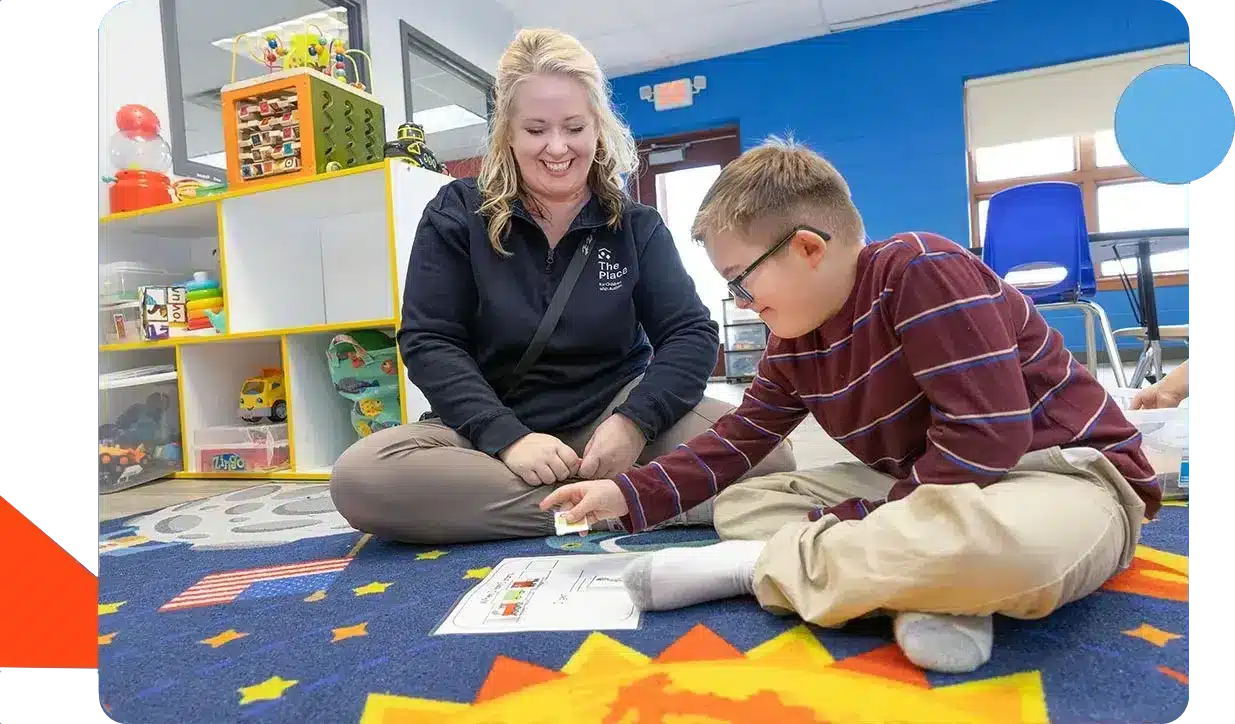
When children with autism are working on communication, every moment matters. Through our partnership with The Place for Speech, licensed Speech-Language Pathologists come directly to our centers. Speech therapy is fully integrated into your child’s day, making support feel connected, consistent, and easier for families.
What Is Speech Therapy?
Speech therapy helps children build the skills they need to communicate, connect, and express themselves more confidently. Depending on the child, that may mean learning to speak, strengthening conversation skills, improving understanding, using AAC, or building feeding and swallowing skills.
Early intervention in speech and language development can make a profound difference in a child’s trajectory, and when it’s delivered alongside ABA therapy, the results are even stronger. Research shows that children make faster, long-term progress when their communication goals are reinforced throughout the day, not just during a single isolated session. That’s exactly what our model is designed to do.
How Speech Therapy Works at The Place
Speech therapy at The Place is built into your child’s existing care plan, so support feels connected instead of separate.
On-Site at Our Centers
No separate appointments, no extra travel. Speech therapy happens where your child already is, woven into their daily routine.
Integrated With ABA
Our SLPs and BCBAs work as one team, sharing goals, tracking progress together, and ensuring your child receives consistent support throughout their day. Co-treatment allows both providers to address communication and behavioral goals simultaneously.
Child-Led and Evidence-Based
Our SLPs blend play-based, drill-based, and child-led approaches to match your child’s needs, learning style, and goals.
Skill Generalization
We emphasize carrying skills across environments, so what your child learns in speech therapy shows up at home, in the classroom, and in the community.
Why ABA and Speech Therapy Work Better Together
ABA therapy and speech therapy both share the same goal of helping your child communicate and connect with others. BCBAs working in ABA therapy use evidence-based strategies to build and reinforce behaviors. SLPs bring deep expertise in language development, motor speech, social communication, and AAC. When combined, they create a feedback loop: language goals set in speech therapy are practiced and reinforced during ABA, and communication behaviors shaped in ABA are refined and expanded in speech.
Our SLPs and BCBAs share data, align programming, and communicate regularly so that your child’s support is never siloed.

What Our SLPs Treat
We partner with SLPs trained and experienced across a wide range of communication and developmental areas:
Expressive Language
Helping children communicate their thoughts, needs, and feelings.
Receptive Language
Building connection through play, conversation, and peer interaction.
Articulation
Improving clarity and precision of speech sounds.
Phonological Processes
Addressing patterns of sound errors that affect communication.
Childhood Apraxia of Speech (CAS)
Supporting children with motor-based speech difficulties.
Augmentative & Alternative Communication (AAC)
Introducing and building communication systems for nonverbal or minimally verbal children.
Pragmatics
Developing social communication skills — conversation, eye contact, and turn-taking.
Play
Using play as a foundation for language development and social connection.
Feeding & Swallowing
Addressing sensory and motor challenges related to eating and swallowing.
Our Speech-Language Pathologists
The right SLP makes all the difference. We’ve carefully partnered with speech-language pathologists who bring strong clinical expertise and a genuine passion for their work.
ASHA Certified & Illinois Licensed: Every SLP at The Place for Speech holds the ASHA Certificate of Clinical Competence, which is the gold standard in speech-language pathology.
Specialists in Early Childhood Autism: Our SLPs specialize in working with children with autism and early childhood communication development.
Passionate About Kids: Credentials matter. So does heart. Our SLPs are chosen as much for their warmth, patience, and genuine love of working with children as for their clinical expertise.
What to Expect
Speech therapy at The Place is available to children currently enrolled in our ABA program. Here’s how it gets added to your child’s day:
1. Clinical Recommendation & Family Collaboration: Families, BCBAs, and care teams work together to determine whether speech therapy would be a helpful addition to your child’s program.
2. Insurance Verification: Our team verifies your speech therapy benefits and walks you through coverage before services begin.
3. SLP Assessment: Your child’s SLP completes an evaluation to better understand their communication strengths, needs, and goals.
4. Scheduling & Session Planning: Your child’s therapy schedule and session frequency are determined based on their needs, goals, and availability.
5. Added Into the Day: Your child’s SLP comes directly to their center for scheduled sessions built into their regular program and routine.
We Change Lives Every Day
Whether you’re exploring ABA therapy for the first time or are interested in adding speech therapy to your child’s program, our team is here to help you understand your options and next steps.
Submit the form below, and a member of our team will be in touch.
Get Started
FAQs: Speech Therapy at The Place
Is speech therapy available at The Place?
Yes. While The Place does not directly employ in-house speech therapists, we partner with licensed Speech-Language Pathologists who travel directly to our centers to provide coordinated, on-site therapy alongside your child’s ABA program.
Does my child have to be enrolled in ABA therapy to receive speech therapy?
Yes. Speech therapy through The Place for Speech is currently available to children enrolled in our ABA therapy program.
How is speech therapy integrated with ABA therapy?
SLPs and BCBAs collaborate closely to align goals, share progress, and help children practice communication skills throughout their daily routines.
What types of communication challenges does speech therapy help with?
Speech therapy may support expressive language, receptive language, articulation, AAC use, social communication, feeding challenges, and more.
How often will my child receive speech therapy?
Speech therapy frequency depends on your child’s individual needs, goals, schedule, and clinical recommendations.